
Arşiv
-
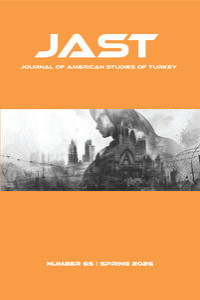
JAST 65: Spring 2026
Published in June 2026, the 65th issue of the Journal of American Studies of Turkey opens with a welcoming editorial by Nisa Harika Güzel Köşker, followed by a memorial tribute by Burçin Erol honoring Professor Dr. Emel Doğramacı. The research section presents a diverse range of literary and cultural studies: Ioana Constandache explores eschatology in the works of Nathaniel Hawthorne, while Radhia Flah Gaiech examines postmodern spatiality and urban landscapes in Tim Powers's novel Last Call. Shifting to modern digital activism and legal critiques, Atalie Gerhard analyzes the decolonial aesthetics of the O'odham Anti-Border Collective on Facebook, and Panagiota Koutsi investigates trauma, justice, and civic complicity in Richard Edwin Knipe Jr.’s Prisoners. Finally, Gözde Zülal Solak and Özlem Karagöz Gümüşçubuk offer a comparative study of poetry as a form of resistance in the works of Adrienne Rich and Chrystos. -
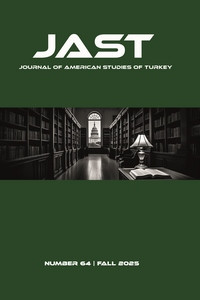
JAST 64: Fall 2025
Published in December 2025, the 64th issue of the Journal of American Studies of Turkey opens with an editorial tribute by Defne Ersin Tutan in memory of Assistant Professor Gordon J. R. Marshall (1973–2025). The research section presents a wide perspective: Ayşegül Avcı re-evaluates the trope of the "Terrible Turk" through direct encounters that shaped American views, while Sotirios Bampatzimopoulos examines liquid modernity and the state of nature in The Last of Us. Lanouar Ben Hafsa explores Islamophobic discourse as an ideological weapon in the US and France, Şenol Bezci analyzes crisis-ridden masculinity in Revolutionary Road, and Henrieta Krupa investigates how American feminist artists reframe the female body in visual art. Additionally, Özge Üstündağ Güvenç provides a cartographical reading of Zeyn Joukhadar’s The Map of Salt and Stars, and Onur Yiğit examines non-hegemonic masculinities in Carson McCullers’s Reflections in a Golden Eye. The issue concludes with a review article by Regine Rosenthal exploring Indigeneity, belonging, and postcolonial life in Morgan Talty’s 2024 novel Fire Exit. -
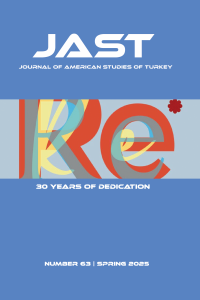
JAST 63: Spring 2025
Published in June 2025, the 63rd issue of the Journal of American Studies of Turkey marks the journal's 30th anniversary, opening with editorial reflections from former editors Meltem Kıran-Raw, Özlem Uzundemir, and Defne Tutan, alongside a memorial tribute to Professor Gönül Uçele by Bilge Mutluay Çetintaş. The research articles begins with Buket Doğan’s exploration of Gary Snyder's attempt to break the anthropocentric cycle through language, and Burçin Erol’s analysis of how Longfellow adapted medieval frame-story traditions in Tales of a Wayside Inn. Additionally, Catarina Moura investigates migrant and border patrol representations in Francisco Cantú’s The Line Becomes a River, Emine Sonal and Jeffrey Howlett reevaluate time through Louis Armstrong and Zora Neale Hurston, Clémentine Tholas examines African American women's experiences in the visual art of Mickalene Thomas and Tschabalala Self, and Himmet Umunç explores early colonial views of American geography as paradise versus wilderness. Finally, the issue concludes with İsmail Can Demir’s review of On Savage Shores and Cenk Tan’s analysis of Masters of the Air. -
JAST 62: Fall 2024
Published in October 2024, the 62nd issue of the Journal of American Studies of Turkey features a diverse collection of research articles covering literature, foreign policy, media, and culture. Md Abu Shahid Abdullah opens the research section by exploring white supremacy and magical resistance in Louise Erdrich’s novel Tracks, followed by Gökhan Ereli analyzing how American exceptionalism shapes U.S. foreign policy. Several contributors focus on contemporary fiction, drama, and digital culture. Elif Ergin examines vulnerability and care in Valeria Luiselli’s Lost Children Archive, while Hysni Kafazi looks at space and decor as existential metaphors in Tennessee Williams's plays. Katarzyna Machala re-reads Margaret Atwood’s The Heart Goes Last through the lens of a retro thriller and digital revolution, and Melis Mülazımoğlu investigates the intersection of plastic fantasy and ecological awareness in the cultural phenomenon of Barbie. The issue concludes with a book review by Buket Doğan on Mason Currey’s Daily Rituals collections. -
JAST 61: Spring 2024
Published in June 2024, the 61st issue of the Journal of American Studies of Turkey opens with a memorial tribute by Meldan Tanrısal honoring Professor David Baldwin Espey. The research articles that follow explore a diverse range of topics across literature, poetry, music, and drama. Noura El Aoun examines ecriture feminine and ecoethics in Richard Powers’ novel The Overstory, while Bryan Banker analyzes Black Hegelian poetry in Langston Hughes’s collection The Panther and the Lash. Shifting to music and theater, Atalie Gerhard investigates the construction of Asian American identity in the musical album Struggle by Asians in America (1973) by Grain of Sand, and Onur Karaköse explores the crisis of American masculinity in James Herne’s 1890 play Margaret Fleming.
-

JAST 60: Fall 2023 - ITALIAN AMERICAN MATERIAL CULTURE ISSUE
Published in October 2023, the 60th issue of the Journal of American Studies of Turkey is a special edition dedicated entirely to Italian American material culture, opening with an introductory overview by Elisabetta Marino laying the groundwork for the field. Stefano Luconi explores food as an arena for ethnic conflict and identity construction, Giulia Tarantino invites readers to examine food and cultural identity in Italian American literature, Ylenia De Luca analyzes food and women in Mary Di Michele’s novel Tenor of Love, and Giuseppe Capalbo reads material culture in the works of Louise DeSalvo. Other contributors focus on community traditions and regional history, with Matteo Cacco investigating religious rituals in Pietro Di Donato’s Three Circles of Light, Giannia A. Lucantoni moving beyond stereotypes in Di Donato's work, Vincenza Iadevaia collecting myth histories of Italian Floridians in South Florida, and Christine Contrada traces Giuseppe Garibaldi’s footsteps on Staten Island.
-

JAST 59: Spring 2023
Published in June 2023, the 59th issue of the Journal of American Studies of Turkey features a diverse selection of research articles spanning history, theater, poetry, and literature. Özgür Atmaca opens the issue with a historical study on the anti-lynching activism of southern white women through Jessie Daniel Ames and the Association of Southern Women for the Prevention of Lynching between 1930 and 1942. Shifting to contemporary theater, Duygu Beste Başer Özcan examines disability and accessible intimacy in Stephen Karam's play The Humans, while Onur Ekler evaluates T. S. Eliot's use of epigraphs through the lens of Deleuze and Guattari's assemblage theory. Finally, Laëtitia Nebot-Deneuville explores Northern Italian travels and transgression in Edith Wharton's Glimpses of the Moon and Ernest Hemingway's Across the River and into the Trees. -

JAST 58: Fall 2022 - LIFE WRITING ISSUE
Published in fall 2022, the 58th issue of the Journal of American Studies of Turkey is a special edition dedicated entirely to life writing, opening with an introductory overview by S. Bilge Mutluay Çetintaş on the core issues surrounding the genre. The collection features diverse personal narratives and memoirs, beginning with Mert Deniz examining the self-representations of Levi Parsons and Pliny Fisk, the first American missionaries to the Middle East. Mariya Doğan then explores reading lists as manifestos in Karla F. C. Holloway’s bibliomemoir BookMarks: Reading in Black and White, while Aylin Pekanık analyzes the subversion of illness narratives and the role of the unreliable narrator in Lying: A Metaphorical Memoir. Additionally, Ana Kocić Stanković investigates American literary connections in American Orphan, and Gül Varlı Karaarslan concludes the research section by examining how Kwame Onwuachi asserts Black culinary identity in his memoir Notes of a Young Black Chef.
-
JAST 57: Spring 2022
Published in spring 2022, the 57th issue of the Journal of American Studies of Turkey opens with A. Deniz Bozer's tribute to Saadet Bozkurt. The research articles span postmodern fiction, science fiction, politics, and theater. Lovorka Gruić Grmuša examines intermediality and violence in Robert Coover’s writing, while Firuze Güzel analyzes the ethical implications of Michael Crichton’s novel Prey as a thought experiment. Other contributors focus on environmentalism, politics, and classic drama. Tanguy Harma traces the connection from Kerouac to Thoreau regarding nature and rebellion, and Bilge Mutluay Çetintaş explores women’s movements during the Donald Trump administration. Shifting to literature and philosophy, Şemsettin Tabur looks at the spatiality of violence in Susan Glaspell’s Trifles, Cenk Tan applies the master-slave dialectic to Philip K. Dick’s The Man in the High Castle, and Sinem Yazıcıoğlu investigates trauma and event in Anzia Yezierska’s Hungry Hearts. -
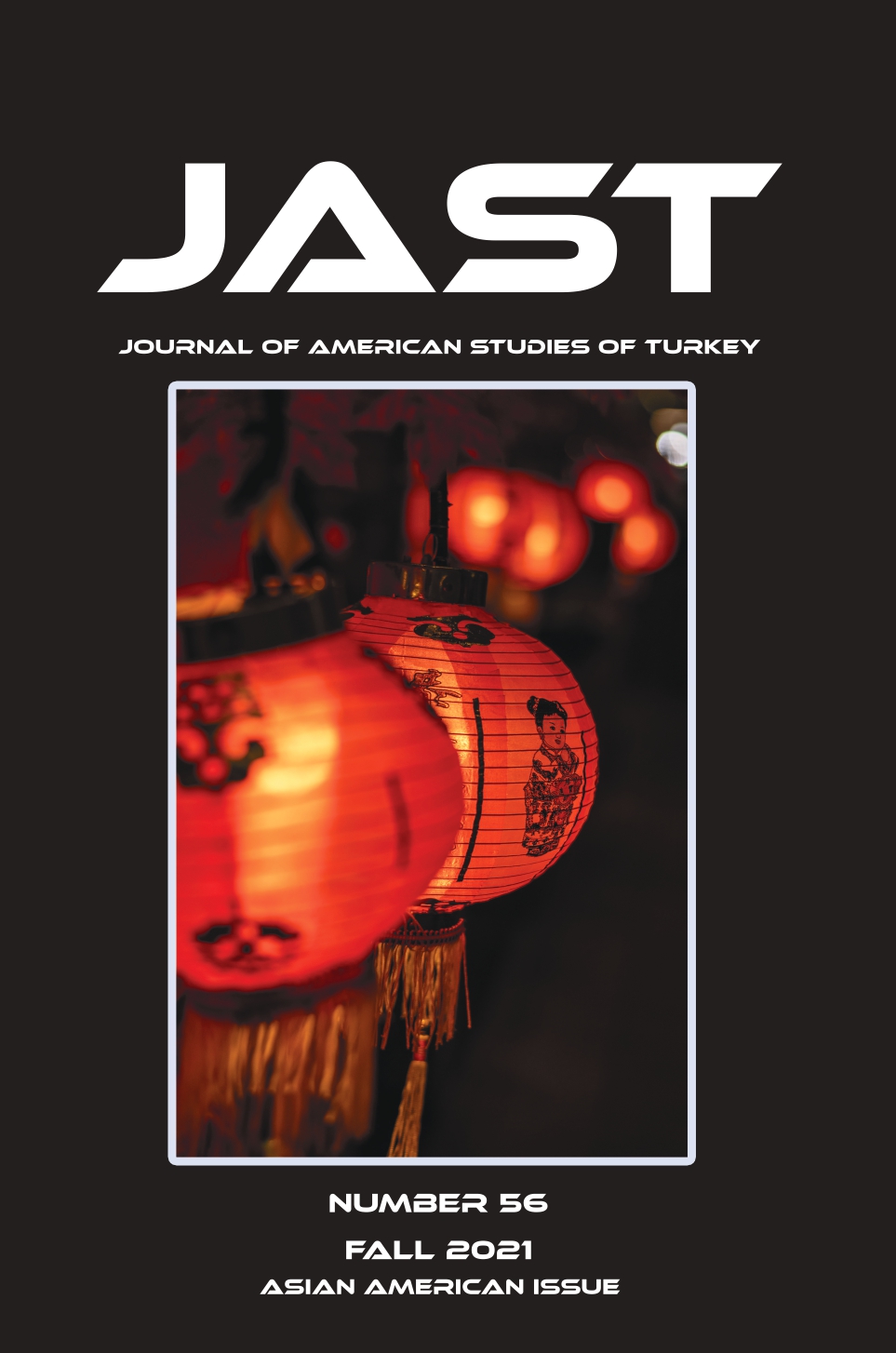
JAST 56: Fall 2021 - ASIAN AMERICAN ISSUE
Published in fall 2021, the 56th issue of the Journal of American Studies of Turkey is a special edition dedicated to the Asian American experience. Defne Ersin Tutan opens the edition with an editorial introduction, followed by a series of research articles exploring diaspora, identity, and literature. Yasmina Djafri and Nadia Abdelhadi present an intersectional reading of Julie Otsuka’s The Buddha in the Attic, while Fatma Eren examines the intersection of working-class refugee struggles and violence in Ocean Vuong’s On Earth We're Briefly Gorgeous. Other contributors focus on transnationalism, relationships, and culinary culture. Carole Martin analyzes South Asian American transnationality and arborescent subjectivities in Jhumpa Lahiri’s works, and Nilsen Gökçen explores the human-dog connection, aging, and friendship in Sigrid Nunez’s novel The Friend. Finally, Gül Varlı Karaarslan investigates culinary identity and performances of masculinity in contemporary Korean American chef memoirs. -

JAST 55: Spring 2021
Published in spring 2021, the 55th issue of the Journal of American Studies of Turkey covers a broad range of literature, identity, and film. Defne Ersin Tutan opens the edition with an editorial introduction. Gizem Akçil examines sisterhood and alienation in Shirley Jackson’s We Have Always Lived in the Castle, Süleyman Bölükbaş looks at the construction of gay sexuality in Edmund White’s A Boy’s Own Story, and Meryem Bahar Karataş explores African American women's narratives in Lucille Clifton’s Generations. Ezgi İlimen discusses culinary survival in Maya Angelou's writing. Gülşen Aslan Uslu analyzes spatial elements in An Opera in Flatland, Olena Boylu covers historical consciousness in Underworld, Fırat Karadaş tackles the distorted Enlightenment ideology in Do Androids Dream of Electric Sheep?, and Vahit Yaşayan writes about the end of the real American cowboy in Cities of the Plain. Shifting to cinema, Elizabeth Joan Abele revisits adoption narratives through the film News of the World, while Susan Savage Lee explores immigrant directors and the breaking of tradition in Argentine cinema through Mario Soffici’s Viento Norte. -
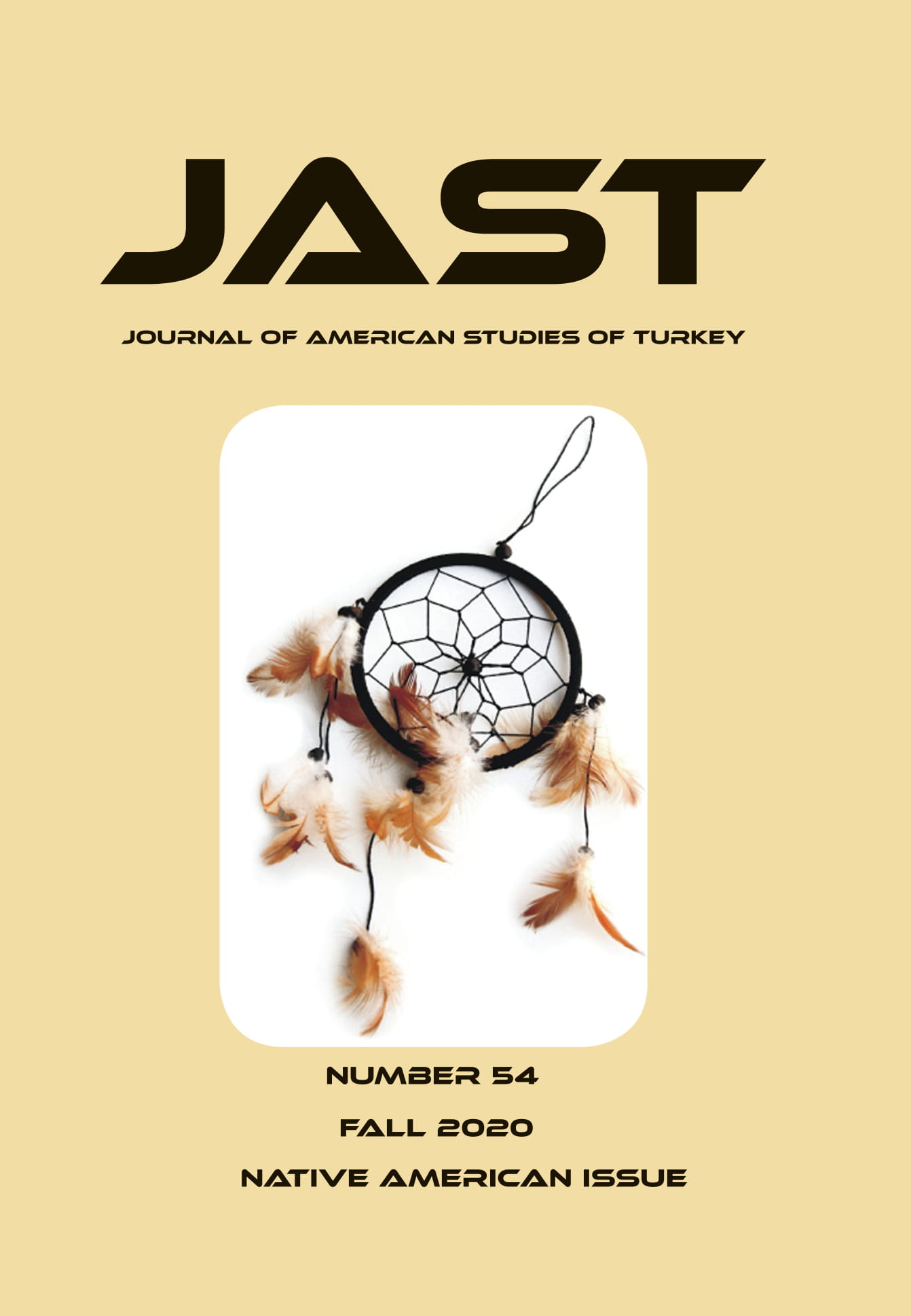
JAST 54: Fall 2020 - NATIVE AMERICAN ISSUE
Published in fall 2020, the 54th issue of the Journal of American Studies of Turkey is a special edition dedicated to Native American studies. Meldan Tanrısal opens the edition with an editorial introduction. Valerian Three Irons reflects on the enduring nature of the land, while Lawrence B. Goodheart looks back at the 1637 Mystic Fort Massacre in Connecticut. Daniele Fiorentino discusses the rewriting of Native American history in the 21st century. Özge Özbek Akıman analyzes Edward Dorn's perspective in The Shoshoneans, and Nichole S. Prescott examines how Indigenous women's leadership is built through community and culture. Shifting to cinema, Cem Kılıçarslan compares real Native Americans to their portrayals in Western films. The issue concludes with a book review on Louise Erdrich’s work by Meldan Tanrısal and an interview piece by Ece Soydam about a documentary following the modern Lakota people.
-
JAST 53: Spring 2020
Published in spring 2020, the 53rd issue of the Journal of American Studies of Turkey focuses on preservation, commemoration, and American identity through monuments and museums. Nisa H. Güzel Köşker introduces the edition and later provides an essay on the female body and spectatorship in American silent film. Several articles explore the concept of memory and physical spaces. Julia Lange examines Holocaust memory at the German-American Heritage Museum, while Ece Saatçıoğlu analyzes the Museum of Jurassic Technology as a postmodern American space. Seda Şen discusses post-9/11 American poetry as a collective monument, and İdil Didem Keskiner explores the Vietnam Veterans Memorial and the destruction of American masculinity in Bobbie Ann Mason’s novel In Country. Finally, Gamze Katı Gümüş investigates how the Pilot created an alternative archive against nationalist amnesia for the Catholic Irish during the Civil War.
-

JAST 52: Winter 2020 - SPECIAL ISSUE: TRAVEL WRITING
Published in winter 2020, the 52nd issue of the Journal of American Studies of Turkey is a special edition focused entirely on travel writing. Annessa Ann Babic opens the edition with an editorial introduction exploring the transnational American gaze in travel literature. The main articles look at diasporic experiences, personal narratives, and historical travelogues. Nina Ha examines how Vietnamese diasporic culture expresses identity across literature and media. Elisabetta Marino analyzes Sophia Peabody Hawthorne’s perspective in Notes in England and Italy, while Tanfer Emin Tunc explores the allure of the exotic and erotic in Isabella Stewart Gardner’s travel writing. The issue wraps up with Christine Contrada reflecting on her seventeen years living as a Florentine and a piece by Lisa Tuttle detailing Genie and Robert's travels through Europe.
-

JAST 51: Fall 2019 - SPECIAL ISSUE: AMIRI BARAKA
Published in fall 2019, the 51st issue of the Journal of American Studies of Turkey is a special edition dedicated entirely to the life and work of Amiri Baraka. Özge Özbek Akıman introduces the edition and later provides both an essay on the musicality of his poetry and an interview with Ammiel Alcalay. The issue features a robust section of tributes and reflections: Dike Okoro and Pierre Joris honor Baraka's lasting impact on American literature, M. G. Stephens examines his poetry in connection to Blues People, and Psyche Williams-Forson explores food as a cultural expression in his work. In the research section, Sultan Komut Bakınç reevaluates the character dynamics in Baraka's landmark play Dutchman, and Kate Siklosi analyzes his "New Ark" and demonic poetics.
-

JAST 50: Spring 2019
Published in spring 2019, the 50th issue of the Journal of American Studies of Turkey opens with tributes to Selhan Savcıgil Endres and Bill Jones. The main essays focus on space, trauma, and identity in modern literature. Yonca Denizarslanı explores Cajun heritage in Elizabeth Nell Dubus’s novel Cajun. Çağdaş Duman applies Julia Kristeva’s concept of abjection to the HIV/AIDS crisis in books by Jamaica Kincaid and Sapphire. Merve Özman Kaya discusses Amy Waldman’s The Submission and its role as a literary anti-monument. Gülşen Aslan Uslu breaks down the structural use of space in Mark Z. Danielewski’s House of Leaves. The edition closes with a book review covering the Beat Generation's reception in Turkey.
-
JAST 49: Fall 2018
Published in fall 2018, the 49th issue of the Journal of American Studies of Turkey starts with Burçin Erol's tribute to the late Laurence Raw. The main articles focus heavily on feminist literature and cultural politics. Gizem Akçil looks at mestiza consciousness in Cherríe Moraga’s Loving in the War Years, while Şule Akdoğan examines feminist science fiction through Joanna Russ’s The Female Man. Kaan Gazne tackles dystopian misogyny by applying 1970s feminist theory to the comic book Bitch Planet, and Prakash Konac analyzes the final poems of Adrienne Rich. Shifting to history, Murat İplikçi tracks how the Scopes Trial pushed fundamentalism out of Democratic Party politics. The edition ends with a book review on Turkish detective fiction and nationalism.
-
JAST 48: Spring 2018
Published in spring 2018, the 48th issue of the Journal of American Studies of Turkey covers literature, film, and gender politics. Duygu Beste Başer writes about the backlash against second-wave feminism in Wendy Wasserstein’s play An American Daughter. Emine Geçgil looks at the struggles of working women in early 1900s New York through Dorothy Richardson’s book The Long Day. Shifting to poetry, Ibis Gómez-Vega analyzes how nature is censored in Amy Newman’s work, while Şenol Bezci breaks down the narrative structure of The Ballad of the Sad Café. Susan Savage Lee compares the conflicting representations of Native Americans in the films Broken Arrow and The Searchers. The issue ends with two book reviews.
-
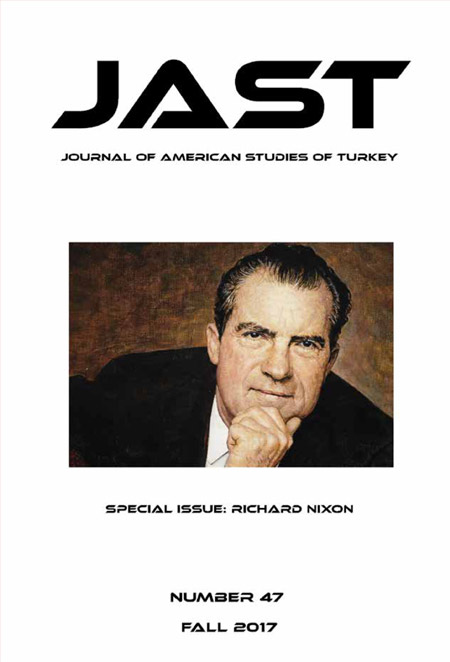
JAST 47: Fall 2017 - SPECIAL ISSUE: RICHARD NIXON
Published in fall 2017, the 47th issue of the Journal of American Studies of Turkey is a special edition focused entirely on Richard Nixon. The issue opens with a short tribute to Professor Necla Aytür by Ayşegül Yüksel before diving into Nixon's political and cultural legacy. Nicole L. Anslover looks at how public perception of the former president continues to shift. Seth Studer analyzes Nixon as a character in literature, while Marta Rzepecka breaks down his Cold War rhetoric. Craig A. Kaplowitz explores his unexpected policy decisions regarding Spanish-speaking Americans. The edition finishes with an interview with Joan Hoff and an essay by Roger Chapman, both questioning how history will ultimately judge his presidency.
-
JAST 46: Spring 2017
Published in spring 2017, the 46th issue of the Journal of American Studies of Turkey opens with a tribute to Professor Robert J. Bertholf. The essays cover literature, history, and pop culture. Elena Furlanetto places the Turkish novel within an American framework, while Elisabetta Marino writes about corruption among New York longshoremen. A special section looks directly at media representations. Annessa Ann Babic examines 1950s ideals through Wonder Woman and board games. Pembe Gözde Erdoğan reads True Blood as a gothic allegory, and Vahit Yaşayan analyzes masculinity in August Wilson's play Fences. Tarık Tansu Yiğit breaks down oriental fantasies in early cigarette ads, and the edition closes with a book review on Cold War culture.
-
JAST 45: Fall 2016
Published in fall 2016, the 45th issue of the Journal of American Studies of Turkey is a special edition dedicated to F. Scott Fitzgerald. The essays focus entirely on his writing and legacy. A. Deniz Bozer applies a Freudian lens to This Side of Paradise, while Kim Moreland tracks determinism across his broader body of work. The Great Gatsby gets heavy attention here. Mary Wardle looks at the challenges of translating the novel, Jason M. Ward breaks down its movie adaptations, and Esin Korkut examines its use of time and space. The issue wraps up with Seda Şen Alta discussing Fitzgerald's poetry and Gül Varlı Karaarslan reviewing his portrayal of the South in the Tarleton stories.
-
JAST 44: Spring 2016
Published in spring 2016, the 44th issue of the Journal of American Studies of Turkey contains four research articles and a solid review section. Margaret Harvey writes about how post-9/11 anxieties filter into teen culture. Mert Önal shifts to politics with a critique of American liberalism and neoliberalism. Trevor Cunnington looks back at the book Let Us Now Praise Famous Men, examining its place in ethnography and sociology. Lisa M. Bunkowski closes the main section by arguing for the practical benefits of multidisciplinary studies. The edition finishes up with book reviews on Henry Miller and race politics, plus film critiques covering Selma, The Martian, and Ex Machina.
-
JAST 43: Winter 2016
Published in winter 2016, the 43rd issue of the Journal of American Studies of Turkey departs from its regular format to present an entire edition of book reviews. The pieces cover a wide range of topics across media, literature, and history. Several reviewers focus on television drama and fan culture, looking at franchises like Twin Peaks, Batman, and Buffy the Vampire Slayer. Other contributors write about American politics and identity. Robert Stannard reviews a collection of John F. Kennedy's letters, while Jack Ryan examines the myth of American innocence. The issue also includes a large section on Turkish and Middle Eastern history, covering the Ottoman Empire, the Young Turks, and Muslim women's rights.
-
JAST 42: Fall 2015
Published in fall 2015, the 42nd issue of the Journal of American Studies of Turkey centers entirely on transnational Latino/a studies and border narratives. Christopher Rivera and Jennifer A. Reimer open with a discussion on reading and writing from the margins. The essays explore literature, poetry, and performance. Sophia McClennen considers Ariel Dorfman’s place in Latin studies, while Lorna Perez examines organic domestic spaces in Judith Ortiz Cofer's Silent Dancing. Rachel Combs-Gonzalez analyzes Mexican and Chicana queer drag performances. Other writers, like Katherine Lashley and Juanita Heredia, analyze works by Julia Alvarez, Angie Cruz, and Nelly Rosario. The issue also includes interviews with Carolina De Robertis and Santiago Vaquera-Vasquez, plus a massive review section covering films like El Norte and Real Women Have Curves.
-
JAST 41: Spring 2015
Published in spring 2015, the 41st issue of the Journal of American Studies of Turkey brings together a broad mix of media, literature, and history. Ian Olney writes about F. Scott Fitzgerald and The Great Gatsby on film, while Arnold Anthony Schmidt traces how silent movies still influence modern cinema. Leslie McMurtry looks at audio drama, and Bryan Jack points out how popular culture often erases Southern history. Bruce Makoto Arnold and his co-authors examine the photography surrounding Historically Black Colleges and Universities. Laura Virginia Castor analyzes trauma in Nicole Krauss’s fiction. Touching on cross-cultural connections, David Espey shares a piece on Arthur Miller’s time in Erzurum. The issue ends with a large section of reviews covering recent films like Gone Girl and Boyhood.
