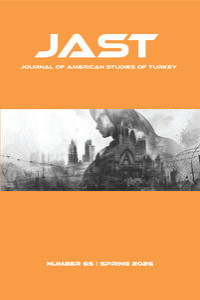
About the Journal
JOURNAL OF AMERICAN STUDIES OF TURKEY
ISSN: 1300-6606 / e-ISSN: 3150-0307
A biannual print and online international publication of the American Studies Association of Turkey, the Journal of American Studies of Turkey operates with a double-blind peer review system. It publishes transdisciplinary work (in English) on American literature, history, art, music, film, popular culture, institutions, politics, economics, geography, and related subjects. Contributors need not be members of the American Studies Association of Turkey.
Articles which cross conventional borders between academic disciplines are particularly welcome, as are comparative studies of the United States.
The American Studies Association of Turkey was founded in 1988 to promote American Studies in Turkey and support Turkish and non-Turkish scholars working in the field. It also aims to further research and publication in Turkish-American comparative studies.
The Journal of American Studies of Turkey is indexed in the MLA International Bibliography, TÜBİTAK/ULAKBİM TR Dizin, and the Classificazione ANVUR delle riviste scientifiche (Italy). It also appears in the Ulrich’s International Periodicals Directory and the MLA Directory of Periodicals. It can be accessed online (see the sidebar), in print, and through the EBSCO and Dergi Park databases.
The American Studies Association of Turkey is not responsible for statements, whether of fact or opinion, made by contributors.
Imprint Address: American Studies Association of Turkey, Cinnah Caddesi No. 20, TAD Binasi, Kat 4, Oda 48, Kavaklidere, Ankara, Turkey

Current Issue